5. Portraits
a. Environmental - This type of portrait usually shows a place that the subject likes to be in or somewhere they know well, like home or workplace, or maybe even a school.
b. Casual - This type of portrait is what we usually see where the subject(s) are the main focus of the picture.
c. Self - This type of portrait is usually a photograph of something that the photographer enjoys or needs to do, but it is always unique and fits the photographer with a passion.
-------------------------------------------------------------------------------------------------------------------------------------------------------
6. Photographic Terms
a. Exposure - The amount of light entering the lens reaching the image sensor, determined by ISO, Aperture, and Shutter Speed.
b. Depth of Field - The difference in distance between the objects in the foreground and the objects in the background of a photograph.
c. Focal Length - The distance between the lens and the image sensor of when the subject is in focus.
------------------------------------------------------------------------------------------------------------------------------------------------------
7. Magazine Covers
a. Early - This type of magazine cover would usually have drawings on them instead of photographs. And the ones that had photographs would look as if they were drawn on. it usually consisted of the title and drawing that shows the eye-catching category that will make the audience want to buy it.
b. Poster - This type of magazine would usually have a professional photograph of a subject relating to the genre of magazine, with the title and maybe a
c. Married to Text - This type of a magazine cover that has both a picture in the background, a description of the main photograph, and little texts explaining other articles that would be in the magazine.
------------------------------------------------------------------------------------------------------------------------------------------------------
Friday, December 16, 2016

Monday, December 12, 2016
Final Exam Review Part I
1. Captions
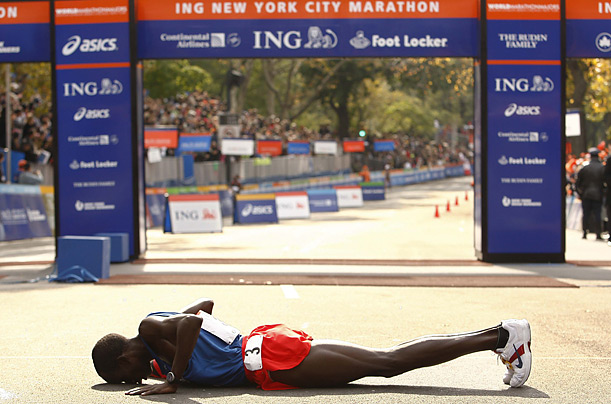
At New York City Marathon - Men's Division, winner Martin Lel kisses the ground out of joy for his victory. From Kenya, he hadn't had much hope of a victory, but after winning the 2007 marathon, he thought of a brighter future in his hopes.
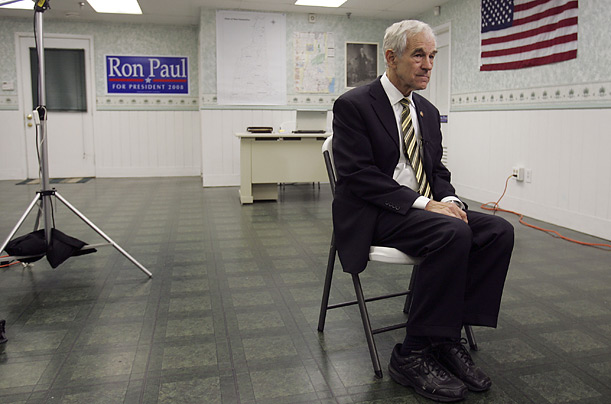
In his campaign headquarters in Concord, New Hampshire, Ron Paul takes a break from the hectic rushing of his campaign. In this presidential hopeful's mind, he might have been thinking that he would be elected for the Republican candidate, but his efforts came to no avail in the end.
--------------------------------------------------------------------------------------------------------------------------------------------
2. Rules of Photography
a. Rule of Thirds - A photography type where the main subject of the photo is to one particular side of the photo, only taking up a third of the screen.
b. Balancing Elements - A photography style where the colors or definitions/physical elements are all balanced out within the photograph, making it easier to look at.
c. Leading Lines - A photograph type where there are lines leading to the subject or lines that lead to a far away object.
d. Symmetry and Patterns ( Repetition ) - A photograph style where there are multiple objects or subjects lined up or in a similar pattern that makes a feeling of depth for the viewer.
e. Viewpoint - A photography type where the view from the camera (on target, below, or above) will help to create a sort of closeness and a better view for the viewer.
f. Background - A photography style where the background will either be plain or blurred in order to make the subject stand out more. This is used a lot when the camera is auto-focused on the subject.
g. Creating Depth - A photography type where the objects in the foreground and background will allow the viewer to mentally explore the scene, making it seem like they could step into the photograph.
h. Framing - A photography style where the subject has a natural frame around them, like vines, trees, windows, doorframes, a picture frame, etc. types of natural frames that could put the focus more onto the subject directly.
i. Cropping - A photography type where the photograph is edited and the edges are cut off, making the photograph thinner and more focused on the subject.
j. Mergers / Avoiding Mergers - A photography style where the background and subject seem as if they're connected, and a way to avoid this type of complication, you can simply change the viewpoint or move objects in the background so that the merger is avoided.
---------------------------------------------------------------------------------------------------------------------------------------------
3. Camera Settings
a. ISO - Adjusting this setting in a camera will change the amount of light that enters the sense and will help to brighten and / or darken a photograph.
b. Shutter Speed - Adjusting this setting in a camera will change the speed of the shutter of the camera, making a photo more clear and / or blurry, and will give an effect of movement if used properly.
c. Aperture - Adjusting this setting in a camera will change the size of the sense, helping determine how much light will be in the photograph.
--------------------------------------------------------------------------------------------------------------------------------------------
4. Acceptable Adjustments In Photoshop
I believe that the acceptable ethics of photoshop all really depends on who the photograph is of and what the company/photographer wishes to o with that photo. I would say that completely changing how a person looks is completely unacceptable, but tiny little adjustments such as teeth and minor changes to hair color are acceptable.
Magazine Covers
Goals For Girls - Married Style Magazine Cover

-----------------------------------------------------------------------------------------------------------------------------------------
Pipes and Waterworks - Poster Style Magazine Cover


-----------------------------------------------------------------------------------------------------------------------------------------
Pipes and Waterworks - Poster Style Magazine Cover

Saturday, December 3, 2016
The 100 Most Influential Photos of All Time
1. Iraqi Girl At Checkpoint
 My favorite picture was "Iraqi Girl At Checkpoint". The reason why I like the photos is
because it shows just how precious time and youth can be to us. However, the one that I like more would have to be Iraqi Girl At Checkpoint, just because it gives us a closer look to the horrors around the world that don't seem to think about the fact that some people actually are innocent.
What I see in this photograph is what seems to be a soldier with a gun, almost studying the bloody little crying girl beside him. She seems to be alone, and most definitely afraid of what had just happened to her.
 After reading the summary below and watching the video attached to the site, I saw that this photograph was a series of many that came out during the Iraqi war. It involves a backstory of how the photo came to be, which is actually pretty hard to hear. A family of 8 driving down a road and not stopping as the U.S Soldiers commanded them to stop, and when they didn't, the soldiers opened fire and killed the parents - thinking that they were possible suicide bombers. This was one of the first photos to truly show what was going on in the war of America vs. Iraq.
The photographer's name is Chris Honduras, born on March 14th of 1970 in New York City and he died on April 20th of 2011 in Misurata, Libya. His education was for a variety of schools and universities. According to google, he went to Terry Stanford High School in Fayetteville, North Carolina before going to North Carolina State University. After finishing school there, he went to Ohio University.
---------------------------------------------------------------------------------------------------------------------------------------------------
2. Milk Droplet Coronet

The reason I chose this photo was because of the perfect timing that was used to get this shot. It would probably take me a hundred shots before I could get this, which shows that they either are a great photographer or they have have an extreme amount of patience.
Theres much to say about this photo, because it's exactly what it looks like. It's a droplet of milk that when hitting the red hard surface below it, splashed to look almost like a crown.

The little summary underneath he photo on the website says that this was an experiment for a timer on a camera that the photographer had made himself. This was considered to be the revolutionary stop-motion photograph that helped to lead to the camera flash. Apparently he had worked for years to try and perfect this, and whenever he did, he couldn't believe it.
His name is Harold Edgerton, born on April 6th of 1903 and he died on January 4th of 1990. Throughout his life he wrote many books and he is known for inventing the stroboscope, also known as the flash in the camera. Edgerton's education began at university of Nebraska-Lincoln and moved own to Massachusettes Institute of Technology.
---------------------------------------------------------------------------------------------------------------------------------------------------
3. The Pillow Fight
 The reason I believe that I liked this photo so much, was because I absolutely loved the band The Beatles when I was younger, and it creates such a happy an excited atmosphere that just makes you want to smile.
What I can tell about the boys from their expressions and what is going on, I can conclude that all of the boys from the band are extremely excited, probably from hearing some good news or just having a safe flight, but you can tell that there is no way that these boys could be happier at the moment this photograph was taken.
 Given the information tagged to the picture on the website, the photographer really didn't want to be covering the story but whenever he met the boys he didn't want to ever leave their perky, cocky and happy personalities. The moment that occurred in the photo was because they had just found out the their song "I Want To Hold Your Hand" had hit the No. 1 in the music charts.
Harry Benson was a famous, and for the most part, a serious photographer who cared very deeply about his career. He was born and December 2nd of 1929 and is still alive today. He has written many books and has had many accomplishments in his life to win him such an award as "The Press Photo Award For People in the News".
----------------------------------------------------------------------------------------------------------------------------------------------
4. Behind Closed Doors

This photograph really stood out to me because it got me thinking about how little we know or do for people in homes experiencing domestic violence. It is a horrible issue that we as not only a nation, but a race, should trying our best to put an end to.

In the picture, the scene that seems to be unfolding is what looks like a fist fight, between what I can only assume is a couple, and the woman getting unexpectedly punched or slapped in the face by the male in the situation.
The photographer of this series of photos called "Domestic Violence" is Donna Ferrato. She is famous for this particular series of photos because of the amount of graphic content being shown and because how insightful and informative to all of us about just how bad some cases of domestic violence can be. She was born on June 5th of 1949 in the city of Waltham, Massachusetts, and she is still alive today.
----------------------------------------------------------------------------------------------------------------------------------
5. Mushroom Cloud Over Nagasaki

 The reason I chose this photograph is because I love how it looks, but it also reminds us of the bombing we did. Reminds us of what we've done that only ruined the lives of others to benefit ourselves. It shows the selfishness that we held in our hearts that we've tried to cover up and ignore. The situation that was captured in this photo is obviously the after effects of a bombing on Nagasaki, Japan.
Lieutenant Charles Levy captured this photo in 1945 during World War II. He was born on October 6th of 1918 and he died later in his life on November 14th, 1997 in Philadelphia. Not much information besides that I had provided could be found on him.
My favorite picture was "Iraqi Girl At Checkpoint". The reason why I like the photos is because it shows just how precious time and youth can be to us. However, the one that I like more would have to be Iraqi Girl At Checkpoint, just because it gives us a closer look to the horrors around the world that don't seem to think about the fact that some people actually are innocent.
What I see in this photograph is what seems to be a soldier with a gun, almost studying the bloody little crying girl beside him. She seems to be alone, and most definitely afraid of what had just happened to her.
 After reading the summary below and watching the video attached to the site, I saw that this photograph was a series of many that came out during the Iraqi war. It involves a backstory of how the photo came to be, which is actually pretty hard to hear. A family of 8 driving down a road and not stopping as the U.S Soldiers commanded them to stop, and when they didn't, the soldiers opened fire and killed the parents - thinking that they were possible suicide bombers. This was one of the first photos to truly show what was going on in the war of America vs. Iraq.
The photographer's name is Chris Honduras, born on March 14th of 1970 in New York City and he died on April 20th of 2011 in Misurata, Libya. His education was for a variety of schools and universities. According to google, he went to Terry Stanford High School in Fayetteville, North Carolina before going to North Carolina State University. After finishing school there, he went to Ohio University.
---------------------------------------------------------------------------------------------------------------------------------------------------
2. Milk Droplet Coronet

The reason I chose this photo was because of the perfect timing that was used to get this shot. It would probably take me a hundred shots before I could get this, which shows that they either are a great photographer or they have have an extreme amount of patience.
Theres much to say about this photo, because it's exactly what it looks like. It's a droplet of milk that when hitting the red hard surface below it, splashed to look almost like a crown.

The little summary underneath he photo on the website says that this was an experiment for a timer on a camera that the photographer had made himself. This was considered to be the revolutionary stop-motion photograph that helped to lead to the camera flash. Apparently he had worked for years to try and perfect this, and whenever he did, he couldn't believe it.
His name is Harold Edgerton, born on April 6th of 1903 and he died on January 4th of 1990. Throughout his life he wrote many books and he is known for inventing the stroboscope, also known as the flash in the camera. Edgerton's education began at university of Nebraska-Lincoln and moved own to Massachusettes Institute of Technology.
---------------------------------------------------------------------------------------------------------------------------------------------------
3. The Pillow Fight

What I can tell about the boys from their expressions and what is going on, I can conclude that all of the boys from the band are extremely excited, probably from hearing some good news or just having a safe flight, but you can tell that there is no way that these boys could be happier at the moment this photograph was taken.
Given the information tagged to the picture on the website, the photographer really didn't want to be covering the story but whenever he met the boys he didn't want to ever leave their perky, cocky and happy personalities. The moment that occurred in the photo was because they had just found out the their song "I Want To Hold Your Hand" had hit the No. 1 in the music charts.Harry Benson was a famous, and for the most part, a serious photographer who cared very deeply about his career. He was born and December 2nd of 1929 and is still alive today. He has written many books and has had many accomplishments in his life to win him such an award as "The Press Photo Award For People in the News".
----------------------------------------------------------------------------------------------------------------------------------------------
4. Behind Closed Doors

This photograph really stood out to me because it got me thinking about how little we know or do for people in homes experiencing domestic violence. It is a horrible issue that we as not only a nation, but a race, should trying our best to put an end to.

In the picture, the scene that seems to be unfolding is what looks like a fist fight, between what I can only assume is a couple, and the woman getting unexpectedly punched or slapped in the face by the male in the situation.
The photographer of this series of photos called "Domestic Violence" is Donna Ferrato. She is famous for this particular series of photos because of the amount of graphic content being shown and because how insightful and informative to all of us about just how bad some cases of domestic violence can be. She was born on June 5th of 1949 in the city of Waltham, Massachusetts, and she is still alive today.
----------------------------------------------------------------------------------------------------------------------------------
5. Mushroom Cloud Over Nagasaki
The reason I chose this photograph is because I love how it looks, but it also reminds us of the bombing we did. Reminds us of what we've done that only ruined the lives of others to benefit ourselves. It shows the selfishness that we held in our hearts that we've tried to cover up and ignore. The situation that was captured in this photo is obviously the after effects of a bombing on Nagasaki, Japan.Lieutenant Charles Levy captured this photo in 1945 during World War II. He was born on October 6th of 1918 and he died later in his life on November 14th, 1997 in Philadelphia. Not much information besides that I had provided could be found on him.
Subscribe to:
Comments (Atom)