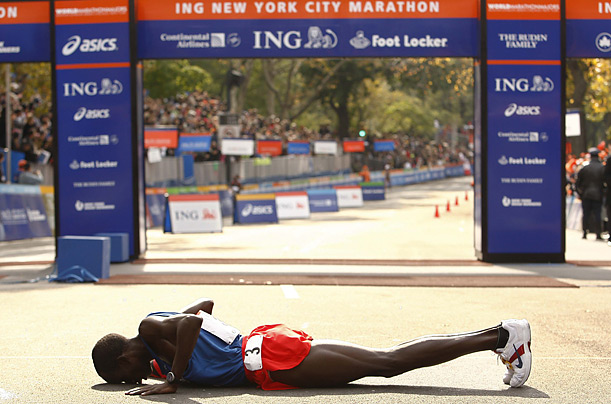
At New York City Marathon - Men's Division, winner Martin Lel kisses the ground out of joy for his victory. From Kenya, he hadn't had much hope of a victory, but after winning the 2007 marathon, he thought of a brighter future in his hopes.
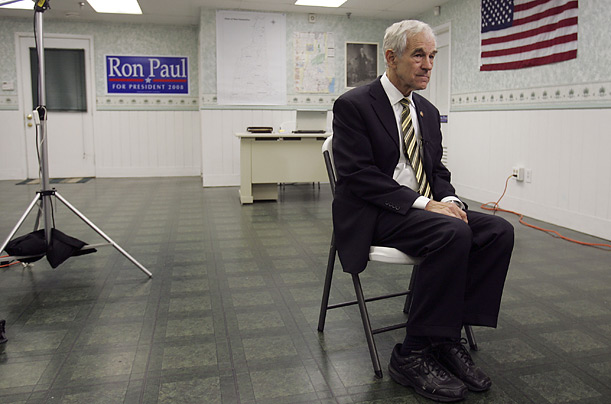
In his campaign headquarters in Concord, New Hampshire, Ron Paul takes a break from the hectic rushing of his campaign. In this presidential hopeful's mind, he might have been thinking that he would be elected for the Republican candidate, but his efforts came to no avail in the end.
--------------------------------------------------------------------------------------------------------------------------------------------
2. Rules of Photography
a. Rule of Thirds - A photography type where the main subject of the photo is to one particular side of the photo, only taking up a third of the screen.
b. Balancing Elements - A photography style where the colors or definitions/physical elements are all balanced out within the photograph, making it easier to look at.
c. Leading Lines - A photograph type where there are lines leading to the subject or lines that lead to a far away object.
d. Symmetry and Patterns ( Repetition ) - A photograph style where there are multiple objects or subjects lined up or in a similar pattern that makes a feeling of depth for the viewer.
e. Viewpoint - A photography type where the view from the camera (on target, below, or above) will help to create a sort of closeness and a better view for the viewer.
f. Background - A photography style where the background will either be plain or blurred in order to make the subject stand out more. This is used a lot when the camera is auto-focused on the subject.
g. Creating Depth - A photography type where the objects in the foreground and background will allow the viewer to mentally explore the scene, making it seem like they could step into the photograph.
h. Framing - A photography style where the subject has a natural frame around them, like vines, trees, windows, doorframes, a picture frame, etc. types of natural frames that could put the focus more onto the subject directly.
i. Cropping - A photography type where the photograph is edited and the edges are cut off, making the photograph thinner and more focused on the subject.
j. Mergers / Avoiding Mergers - A photography style where the background and subject seem as if they're connected, and a way to avoid this type of complication, you can simply change the viewpoint or move objects in the background so that the merger is avoided.
---------------------------------------------------------------------------------------------------------------------------------------------
3. Camera Settings
a. ISO - Adjusting this setting in a camera will change the amount of light that enters the sense and will help to brighten and / or darken a photograph.
b. Shutter Speed - Adjusting this setting in a camera will change the speed of the shutter of the camera, making a photo more clear and / or blurry, and will give an effect of movement if used properly.
c. Aperture - Adjusting this setting in a camera will change the size of the sense, helping determine how much light will be in the photograph.
--------------------------------------------------------------------------------------------------------------------------------------------
4. Acceptable Adjustments In Photoshop
I believe that the acceptable ethics of photoshop all really depends on who the photograph is of and what the company/photographer wishes to o with that photo. I would say that completely changing how a person looks is completely unacceptable, but tiny little adjustments such as teeth and minor changes to hair color are acceptable.

No comments:
Post a Comment